Autumn & Winter Campervan Camping UK: Tips, Essentials & Packing List
Camping season doesn't have to end when summer does. In fact, autumn and winter can be some of our favourite times of year to travel in our campervan. There is something special about waking up to crisp autumn mornings, watching the leaves change colour and returning to a cosy campervan after a day outdoors. Continue travelling into winter and you get frosty landscapes, Christmas markets, festive weekends away and some wonderfully cosy evenings in the van. Of course, autumn and winter campervan camping in the UK does need a little more preparation.
Cold nights, rain, mud, condensation, shorter days and fewer campsites being open can all make off-season campervanning more challenging. But with the right preparation, there's no reason your campervan adventures need to stop when summer ends. After years of travelling in our campervan as a family, we've learnt plenty about making cold-weather trips warm, comfortable and enjoyable.
In this guide, I'm sharing our tried-and-tested autumn and winter campervan camping tips, including what to pack, how to stay warm, how to deal with condensation and wet weather, how to find campsites open all year and the little things that make a surprisingly big difference.
New to campervanning? Start with our Vanlife for Beginners guide and guide to planning your first campervan trip.


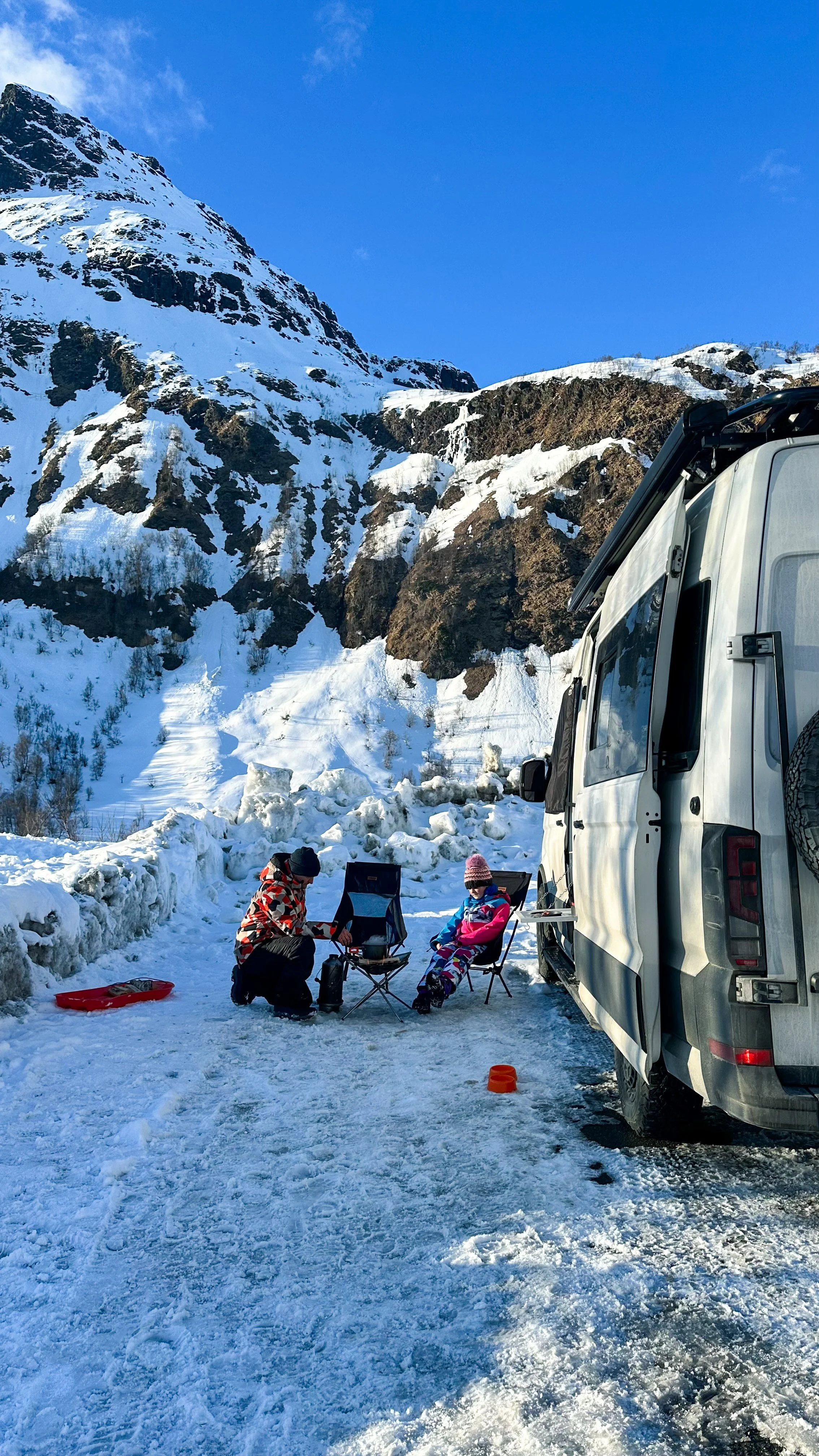
Is autumn and winter a good time for campervan camping in the UK?
Yes! You just need to prepare differently.
September and October can be brilliant months for campervan trips in the UK. Popular destinations are often quieter after the school summer holidays and autumn brings some spectacular scenery. By November and into winter, the experience changes again. Days become shorter, temperatures drop and many seasonal campsites close, but that doesn't mean you have to put the campervan away until spring. Winter gives you the opportunity to explore Christmas markets, enjoy quieter destinations, head out for crisp winter walks and experience places you've previously only visited during summer.
For us, the key is simple:
Prepare for cold, rain and mud and enjoy it when you don't get them!
What do you need for autumn and winter campervan camping?
You don't necessarily need loads of specialist equipment.
The biggest difference comes from packing the right clothing and a few carefully chosen items that help you deal with four things: cold, rain, mud and darkness. Our autumn and winter campervan essentials include:
Thermal base layers
Fleeces and warm jumpers
Waterproof coats and trousers
Warm hats, scarves and gloves
Wellies or waterproof walking boots
Warm bedding or suitable sleeping bags
Extra blankets
Hot-water bottles
Microfibre towels
A large washable doormat
Torches and headtorches
Outdoor lighting
Dustpan and brush
Compact vacuum cleaner
Bags for wet clothing
Packing cubes
Equipment for dealing with condensation
Appropriate campervan insulation for your setup
Packing for colder weather can feel daunting, so use our packing list to make sure you don't forget anything important. For year-round packing advice, have a look at our 5 tips for easily packing your campervan and guide to packing quickly for a weekend campervan trip.
How do you keep a campervan warm in autumn and winter?
Keeping warm is probably the biggest concern people have about winter campervanning. Our first tip is incredibly simple: pack layers. We take thermals, T-shirts, fleeces and jumpers that can easily be layered as the temperature changes. Warm hats, gloves and waterproof clothing are equally important if you want to enjoy being outdoors. For children, waterproof outer layers can be particularly useful because it's much easier to dry a waterproof layer than an entire outfit.
Don't underestimate your bedding
Good-quality bedding becomes much more important as temperatures drop. We use Duvalay bedding, but whatever you use, make sure it is appropriate for the temperatures you're expecting. Extra blankets are easy to add, and a hot-water bottle is one of the simplest ways of making bedtime feel much cosier. You can find more of the everyday items we keep in the van in our campervan essentials guide.


Insulating a pop-top campervan for winter
If your campervan has a pop-up roof, you'll probably notice the difference as the temperature drops. Before the colder months arrive, check the canvas carefully and make sure it's clean, dry and in good condition. We use Fabsil to help look after our pop-top canvas. Depending on your campervan setup, appropriate thermal window covers or pop-top insulation can also help retain heat. Don't completely seal the campervan in an attempt to keep warm. Appropriate permanent ventilation remains important, and any insulation or heating equipment should always be used according to its manufacturer's instructions.
Campervan heating in winter
If your campervan has a properly installed heating system, check it before setting off on your first cold-weather trip. It is much better to discover a problem while the campervan is sitting on your driveway than when you're pitched somewhere on a freezing December night! If you rely on campsite electricity, look for campsites offering electric hook-up and make sure any electrical equipment you use is appropriate for your campervan, campsite supply and manufacturer's instructions. Never use a barbecue, outdoor stove or other unsuitable fuel-burning appliance to heat the inside of a campervan. Even when you're trying to retain heat, ventilation remains important.
How do you stop condensation in a campervan in winter?
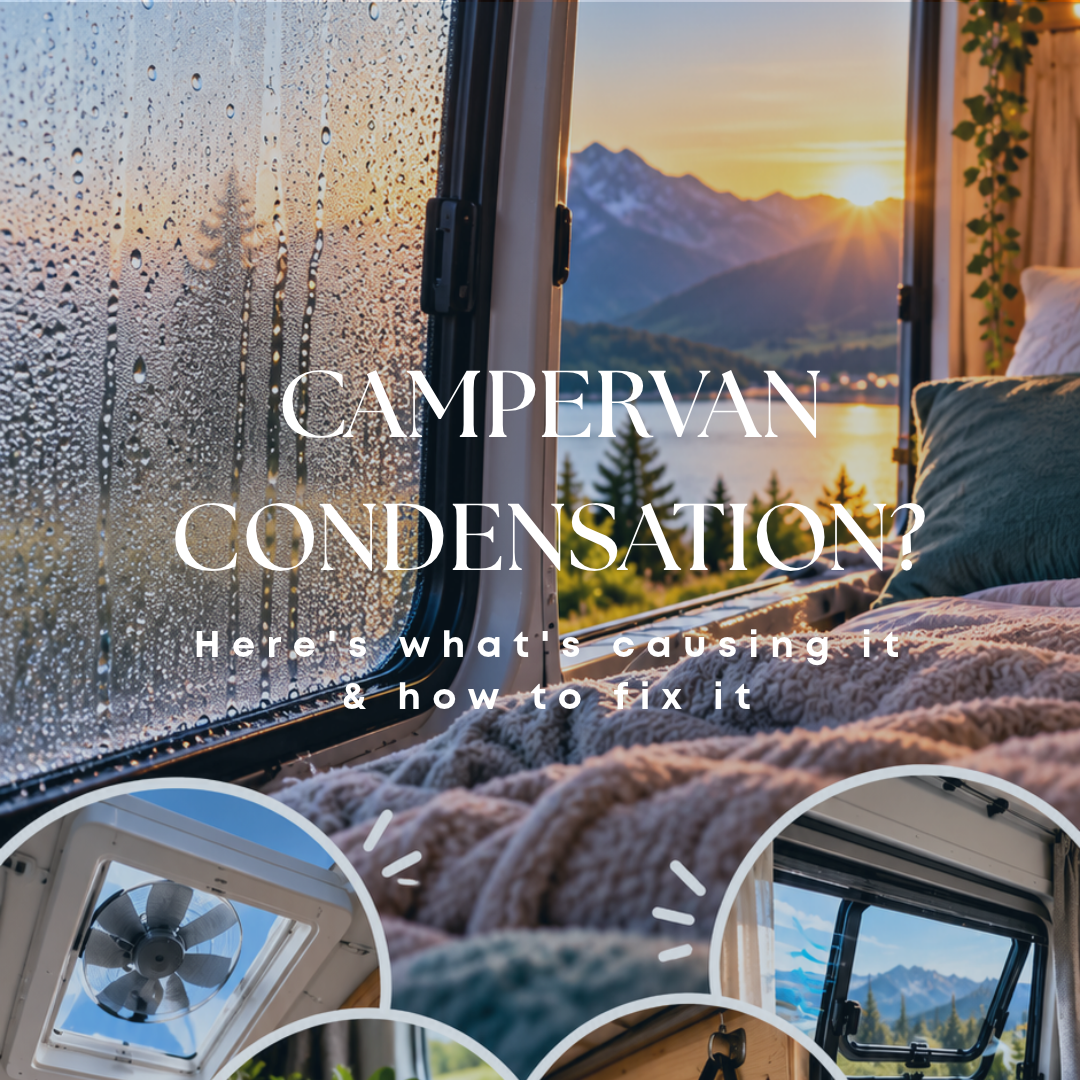
If you've never camped during colder weather, the amount of condensation inside a campervan can come as a surprise. Warm, moist air inside the campervan meets cold surfaces such as windows, resulting in condensation. Now add several people sleeping in a small space, cooking, wet towels, muddy clothing and damp coats and it's easy to understand why the problem can be worse during autumn and winter. One of the most important things is ventilation. It might feel counterintuitive when you're trying to stay warm, but allowing appropriate airflow helps manage moisture inside the campervan. We also try not to leave soaking-wet clothing inside where possible and remove excess moisture from the windows. A super absorbable sponge is useful, and we've also used a Karcher window vacuum for removing moisture.
We have written an entire guide explaining the causes of campervan condensation and how to reduce it.


How do you keep a campervan clean when it's wet and muddy?
Mud is one of the realities of autumn and winter camping! When you are travelling as a family and especially if you have a dog – muddy shoes, wet coats and dirty paws can take over a small campervan incredibly quickly. One of the simplest things we've found is having a large, non-slip washable mat at the entrance to the campervan. Everyone takes their shoes off there, and throughout the day we can simply shake the mat outside. We also love our handmade welly rack, which lives outside the campervan during autumn and winter. Keeping muddy footwear outside makes a surprisingly big difference.

We love our handmade welly rack that lives outside the campervan during the autumn and winter months.
Our autumn and winter campervan cleaning kit
A small dustpan and brush is one of those incredibly simple campervan essentials. We use ours for sweeping the floor, brushing dirt from clothes and even dealing with mud or sand from the dog. I sweep everything into a pile and then vacuum it up. Our compact handheld vacuum is genuinely one of the most-used things in our campervan!
Where do you put wet coats, wellies and muddy camping gear?
This can be one of the biggest challenges if, like us, you prefer travelling without a full awning. We have found a small pop-up storage tent really useful. It gives us somewhere outside the campervan to store equipment we don't necessarily want inside – particularly muddy or wet things – without setting up a large awning. Waterproof or laundry bags are useful too. They take up almost no room when they are empty but give you somewhere to contain wet clothes until you can dry them properly. We also use packing cubes to keep everyone's clothing organised. For more ideas, see our campervan storage guide.
Don't underestimate how early it gets dark
One of the biggest differences between summer and autumn/winter campervan trips is the amount of daylight. You might find yourself arriving at a campsite, cooking, walking the dog or taking children to the facilities after dark. We therefore always make sure torches and lighting are easy to access. A headtorch is particularly useful because it leaves both hands free. Solar-powered, motion sensor lights are also a great solution and paired with double-sided magnetic tape, they can easily stick to the outside of your campervan wherever you need them!


How do you find campsites open in autumn and winter?
This is one of the biggest challenges with off-season campervanning. Many UK campsites close around the end of October or beginning of November, while some stay open throughout the year. So we have done some of the hard work for you.
FREE map: 130+ family-friendly campsites open all year
We have created a Google Map featuring more than 130 family-friendly campsites that stay open all year, including options with electric hook-up, hardstanding pitches and dog-friendly facilities. Use the interactive map below to find a campsite for your next autumn or winter campervan trip. Always check directly with the campsite before travelling. Opening dates, winter facilities, pitch availability and conditions can change. If you'd rather start with a shorter list, read our guide to 10 of the Best Campsites Open All Year for Winter Camping.
What should you look for in a winter campsite?
A campsite that is perfect in July isn't necessarily the one we'd choose in January. For autumn and winter camping, we particularly look for:
Hardstanding pitches, especially after prolonged rain.
Electric hook-up if our setup requires it.
Toilet and shower facilities that remain open.
Somewhere to deal with wet clothing.
Good access in poor weather.
Dog-friendly facilities when we are travelling with the dog.
Somewhere nearby for food and supplies.
Indoor attractions or activities nearby.
Sensible arrival times when it gets dark early.
Check which facilities actually remain available during winter. A campsite can be advertised as open all year while some of its facilities operate seasonally.
Where can you go winter campervanning in the UK?
Winter doesn't have to mean sitting inside your campervan on a campsite. We love using the van as a base for exploring. Winter walks, historic towns, Christmas markets, festive events and attractions can all turn a cold-weather weekend into a proper adventure. For more inspiration, have a look at:


Autumn and winter campervanning with children
Cold-weather campervan trips with children can be brilliant, but we accept that we're probably going to spend more time inside the van than we would during summer. We always make sure there is something to do if the weather changes. Card games, colouring, books and small travel games take up very little room. Warm, waterproof clothing also makes a huge difference. If everyone is warm and dry, getting outside is considerably more enjoyable. And don't underestimate the appeal of a cosy campervan evening. Sometimes returning from a freezing walk, getting into warm clothes and sitting inside the van with blankets, hot chocolate and a family game becomes one of the best memories from the trip.
Find UK campsites that allow campfires
Is there anything better than sitting around a campfire on a crisp autumn evening? For us, a campfire is one of the things that makes autumn and winter camping feel extra special – wrapping up warm, getting cosy around the fire and enjoying a hot chocolate after a day exploring. The tricky part is finding somewhere that actually allows them. Not all UK campsites permit campfires, and those that do may have rules about where and how fires can be used. To make planning your next trip easier, we've created a Google Map of campsites that allow campfires, with options across Great Britain. We love having a campfire when a campsite allows them, and one of our favourite bits of kit to take with us is our Solo Stove. It is portable enough to take on campervan trips and gives us that proper campfire experience without needing to build a fire directly on the ground.
Don't pack the campervan away when summer ends
For us, the end of summer doesn't mean the end of campervan season. Autumn brings colourful landscapes, crisp mornings and quieter destinations. Winter brings frosty walks, festive weekends, Christmas markets and wonderfully cosy evenings inside the van.
Yes, you need to prepare differently. Pack plenty of layers. Prepare for rain. Choose your campsite carefully. Keep the van appropriately ventilated. Make sure your heating setup is ready for colder temperatures. And find somewhere to put those inevitable muddy wellies! Then make the hot chocolate, get cosy and enjoy another season of campervan adventures.
More campervan tips for autumn & winter
→ Campervan Condensation: Causes & How to Fix Them
→ 10 of the Best Campsites Open All Year for Winter Camping


