Campervan Condensation: What Causes It and How to Stop It
There is nothing quite like waking up in the campervan on a crisp autumn morning, pulling back the curtains and finding the windows absolutely dripping with condensation! It is something we have experienced alot during our family campervan adventures, particularly when the temperature drops overnight in the autumn and winter months. Plus when you have got everyone sleeping, cooking and getting ready in a relatively small space, it is amazing how quickly moisture can build up. After 7+ years of travelling in our campervans, we have learnt that managing condensation is an important part of keeping the campervan comfortable, particularly during autumn and winter. The good news is that there are some simple things you can do to help. In this guide, we are looking at what causes condensation in a campervan, how to reduce it and which practical products can help keep moisture under control.
If you you getting ready for some colder-weather adventures, our complete guide to autumn and winter campervan camping is also worth a read.

Why Is There Condensation Inside My Campervan?
Condensation happens when moisture in the air comes into contact with a surface that is cold enough for water droplets to form. In a campervan, you will often notice it on the windows first. During colder weather, the temperature outside drops while the air inside stays relatively warm. Add moisture from breathing, cooking, wet clothing and everyday activities, and those cold windows quickly become covered in water. It is not just a problem during winter, either. Cool, damp mornings in spring and autumn can create similar conditions and because campervans are small spaces, moisture can build up surprisingly quickly.
What Causes Condensation in a Campervan?
There are several everyday activities that contribute to moisture inside a campervan:
Sleeping and breathing
Every person sleeping in the campervan releases moisture into the air through breathing and perspiration. When you are travelling as a family, that moisture can soon add up overnight.
Cooking inside the campervan
Boiling water, or the kettle and cooking meals all release steam. Without enough ventilation, that moisture stays inside the van.
Wet clothes, shoes and towels
Anyone who has travelled in the UK during autumn or winter will know how quickly wet coats, muddy shoes and damp towels can take over a campervan! As these items dry, they release moisture into the air.
Cold windows and metal surfaces
Windows, exposed metal and poorly insulated areas can become much colder than the air inside the campervan, making them common places for condensation to form.
Not enough ventilation
It is tempting to close every window and vent when the weather turns cold, but trapping moist air inside can make condensation worse. The challenge is finding the right balance between keeping warm and allowing enough fresh air to circulate.

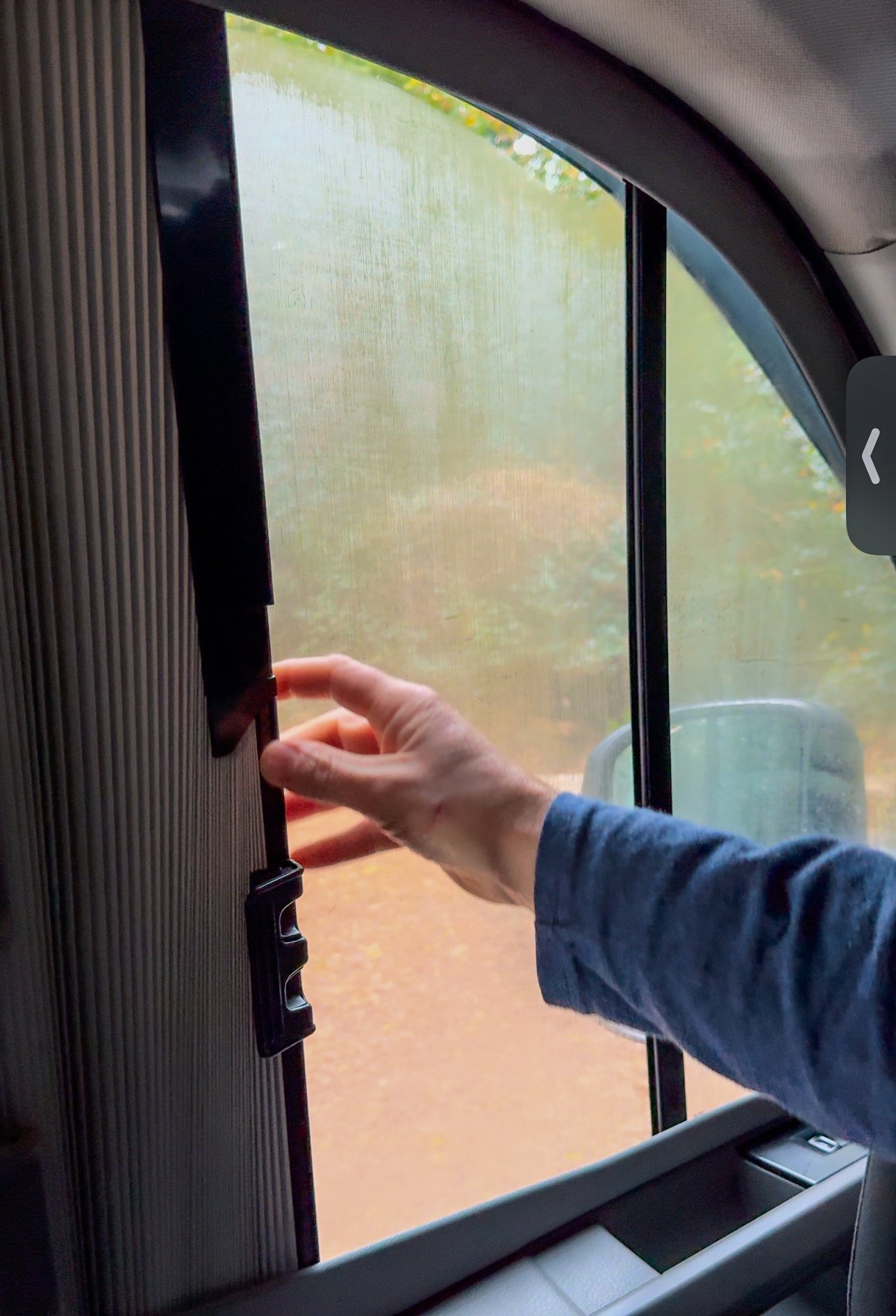
Why Is Campervan Condensation a Problem?
A little condensation on the windows isn't unusual, particularly after a cold night. The problem comes when moisture is allowed to build up and isn't dealt with. Over time, persistent dampness can lead to unpleasant smells, mould growth and damage to soft furnishings or interior materials. It is also worth checking areas you don't see every day, such as behind cushions, around window seals and inside cupboards against external walls. These spaces can have limited airflow, making it easier for moisture to linger. If you are regularly finding large amounts of water inside your campervan, don't assume it's all condensation. Check for leaks around windows, rooflights, doors and other fittings too.
7 Practical Ways to Reduce Condensation in Your Campervan
We have found that the best approach is to combine a few simple habits rather than relying on one product to solve everything. Here are the things we would recommend looking at first.
1. Keep Your Campervan Properly Ventilated
Ventilation is one of the most important ways to manage condensation. It might seem strange to let cold air into the campervan when you are trying to keep everyone warm, but allowing moist air to escape makes a big difference. If your campervan has a roof vent or suitable opening windows, use them in line with your vehicle's ventilation requirements. We find it particularly important to think about airflow when cooking and overnight. A roof fan can also be useful for removing humid air, especially in campervans where cooking creates a lot of steam. Our tip: Don't block or seal permanent ventilation openings in an attempt to stop condensation. They are there for a reason, particularly where gas appliances are fitted.
2. Wipe Away Condensation Each Morning
One of the simplest things you can do is remove the water that's already formed. Leaving droplets sitting on windows and running down onto seals or surrounding surfaces isn't ideal. A microfibre cloth, absorbent sponge or window vacuum can make the morning clear-up much quicker. We have used a window vacuum to help deal with condensation, and it is particularly handy when you are travelling during the colder months. The important thing is to empty or dry whatever you have used rather than leaving a soaking-wet cloth inside the van. You can browse our autumn and winter campervan essentials on Amazon for practical items to keep in the van.
3. Reduce Moisture When Cooking
Cooking is one of those everyday activities that can create far more moisture than you realise. Boiling a pan of water for pasta, or making a hot drink releases steam into a relatively small space. A few simple habits can help:
Put lids on pans whenever practical.
Use an extractor, or roof fan if you have one.
Open a suitable vent, or window to allow steam to escape.
Wipe up spills promptly.
Cook outdoors when the weather and your campsite setup make it practical and safe.
We love being able to cook inside the campervan, especially on a cold evening, so it's really about managing the moisture rather than avoiding indoor cooking altogether. When the weather is good, we also love cooking outside, which helps keep steam and cooking smells out of the van. We have shared our thoughts on two of our favourite outdoor cooking setups in our Cadac Safari Chef 2 vs 2 Cook 2 Pro: Our Honest Campervan Cooking Review.
4. Keep Wet Clothes and Towels Under Control
This is a big one for family campervan trips! After a wet walk, it's not unusual to have several damp coats, muddy shoes and towels to deal with. And if everything gets hung up inside the campervan, all that moisture has to go somewhere. We actually made a slightly controversial decision when converting our medium-wheelbase VW Crafter. We decided not to install a shower and created a dedicated drying room instead! It might sound like an unusual choice, but travelling as a family all year round, we knew we would get far more use out of somewhere to hang wet coats, dry muddy boots and keep damp gear away from our main living space. You can see the drying room we built into our VW Crafter in this Instagram video. Of course, not everyone has space for a dedicated drying room. If you are dealing with wet clothing in a smaller campervan, campsite drying facilities can be brilliant during autumn and winter. Waterproof bags are also handy for keeping damp items separate until you can dry them properly. We have shared more ideas for dealing with wet clothing, muddy footwear and colder-weather adventures in our autumn and winter campervan camping guide. And if you are struggling to find somewhere for everyone's belongings, have a look at our 7 clever campervan storage ideas.
5. Check Your Campervan Insulation
Insulation can help reduce cold spots inside a campervan, making the interior more comfortable during colder weather, but it's important to remember that insulation alone won't solve condensation. You still need suitable ventilation to manage the moisture being produced inside. Poorly fitted insulation, or hidden gaps can also create areas where condensation collects out of sight. If you are converting your own campervan, it is worth researching suitable insulation materials and installation methods for your particular vehicle. For existing conversions, check around windows, doors and other areas where you regularly notice cold surfaces or dampness. Thermal window covers can be useful for comfort, but we'd still recommend checking underneath them regularly for trapped moisture.


6. Consider a Moisture Absorber or Dehumidifier
This is where a moisture absorber can be a useful addition to your campervan setup. When we originally wrote this article, we were working with Bostik and had the opportunity to try their Bostik Breathe non-electric dehumidifier. Although we are no longer working with Bostik, we still really like their product and think it's a handy addition to a campervan, particularly during the colder months when condensation can become more of a problem. It is compact, doesn't need electricity and can help absorb excess moisture, making it particularly useful when you are travelling off-grid. Of course, it is not a replacement for good ventilation, but it can be another useful way to help manage moisture inside your campervan. You can view Bostik Breathe on Amazon.
Are Non-Electric Dehumidifiers Worth Using in a Campervan?
They can be useful for managing background moisture in small spaces, cupboards and areas that don't get much airflow. Their biggest advantages are that they're generally quiet, compact and don't require electricity. However, it' is important to have realistic expectations. A passive moisture absorber isn't a replacement for proper ventilation, and it won't remove moisture as quickly as a suitable powered dehumidifier. If you have got several people sleeping in the campervan, cooking meals and bringing in wet clothing, the amount of moisture produced may be more than a small passive absorber can manage. We'd treat one as an additional tool rather than the main solution. If you are using a refillable absorber, follow the manufacturer's instructions and position it securely so it can't spill or move around while travelling.


What About Electric Dehumidifiers?
A compact electric dehumidifier may be worth considering if you regularly have access to electric hook-up or need to dry out the van while it's parked at home. Performance varies between models, and some types work much better than others in cold conditions. Check the operating temperature, power requirements and suitability for your campervan before buying. You could also use a small digital hygrometer to monitor humidity levels and see whether your changes are helping.
7. Keep an Eye on Hidden Damp Areas
It is easy to focus on the windows because that is where condensation is most obvious, but moisture can also collect in less visible places. We'd recommend checking:
Behind cushions and mattresses
Inside cupboards against external walls
Around window frames and seals
Beneath bedding
Behind stored bags and clothing
Around rooflights and door seals
Giving these areas a little airflow and checking them regularly can help you spot problems before they become more serious. If you find recurring damp patches, staining or mould, investigate the cause rather than simply covering it up with a moisture absorber.
How Do You Stop Condensation on Campervan Windows Overnight?
This is probably one of the most common questions, especially during autumn and winter. Unfortunately, there isn't a magic trick that guarantees completely dry windows every morning, but you can reduce the problem. Before going to bed, make sure wet clothing isn't unnecessarily adding moisture to the living space, use appropriate ventilation and wipe away any existing water. It is also worth checking that window covers aren't trapping moisture against the glass or surrounding surfaces. In the morning, remove any condensation promptly and allow the van to air out when conditions permit. We have learnt that managing moisture is much easier when it becomes part of the daily campervan routine rather than something you only think about once the windows are dripping.
Does Heating a Campervan Stop Condensation?
Heating can help make your campervan more comfortable and may warm some cold surfaces, but it doesn't automatically remove moisture from the air. If you heat the van without allowing humid air to escape, that moisture can still condense on colder areas. The type of heating system matters too. A correctly installed, externally vented heater is very different from an unvented fuel-burning appliance, which can add moisture and create serious safety risks. Never use a barbecue, camping stove or other unsuitable appliance to heat the campervan, and always follow the manufacturer's instructions for your heating system. For more advice on preparing for colder temperatures, have a look at our autumn and winter campervan camping tips.
Our Favourite Campervan Moisture-Control Essentials
You don't need to fill your campervan with gadgets to manage condensation. For us, it's about keeping a few practical things handy and using them regularly. Some useful items to consider include:
Microfibre cloths or an absorbent sponge: For wiping away moisture from windows and surfaces.
A window vacuum: Handy for collecting water from windows quickly.
A digital hygrometer: Helps you keep an eye on humidity inside the campervan.
Thermal window covers: Can improve comfort, provided they are used appropriately and checked for trapped moisture.
Waterproof bags: Useful for temporarily separating wet clothing from dry belongings.
Campervan Condensation FAQs
Is condensation normal in a campervan?
Some condensation is common, particularly on cold mornings when people have been sleeping inside the campervan overnight. However, persistent dampness, mould or water collecting in hidden areas shouldn't be ignored.
Why is condensation worse in winter?
The difference between warm, humid air inside the campervan and cold surfaces becomes greater during winter. People also tend to keep windows closed more often, which can reduce airflow and allow moisture to build up.
Can a dehumidifier stop campervan condensation?
A dehumidifier can help reduce moisture, but it will not necessarily stop condensation completely. Ventilation, reducing moisture from everyday activities and dealing with existing water are also important.
Are moisture absorbers good for campervans?
Passive moisture absorbers can be useful for background humidity, particularly in small spaces. They are less effective at dealing with large amounts of moisture produced by cooking, drying clothes or several people sleeping in the van.
Can condensation cause mould in a campervan?
Yes. Persistent moisture can create conditions that allow mould to grow, especially in poorly ventilated areas. Regular checks, cleaning, ventilation and addressing the source of dampness are important.
Should I leave a campervan window open overnight?
Suitable ventilation can help manage humidity, but the correct arrangement depends on your campervan, weather conditions and installed appliances. Always maintain required permanent ventilation and follow the vehicle and appliance manufacturers' guidance.
Planning an Autumn or Winter Campervan Trip?
We love travelling outside the main summer season. Quieter campsites, crisp mornings and cosy evenings in the campervan are some of the things that make autumn and winter adventures so special. It just takes a little more preparation. If you are planning a trip during the colder months, these guides should help:
Final Thoughts: Keeping Your Campervan Dry and Comfortable
After years of travelling in our campervans, we have learnt that condensation is one of those things that is much easier to manage when you stay on top of it. A little ventilation, wiping down the windows, dealing with wet clothing and keeping an eye on hidden damp areas can make a real difference. Products like moisture absorbers and window vacuums can be useful too, but they work best alongside good everyday habits and once you've got a routine that works for your campervan, there's no reason a bit of chilly weather should put you off heading out for another adventure. Some of our favourite campervan memories have been made during the colder months and we'd hate for a few misted-up windows to spoil yours!